
Business Mortgages Broker arranges business mortgages for limited companies that want to own the building they trade from, across the whole of the West Midlands. A business mortgage is a long-term loan secured on the premises a trading company occupies. It is not a residential mortgage, and we are a broker, not a lender: we prepare the case and put it to the lenders whose criteria fit your sector and your building.
The name causes confusion. "West Midlands" also describes a much smaller metropolitan county and the conurbation around Birmingham, Wolverhampton and Solihull. This page covers the full English region, home to 6,205,854 people in 2025, which also takes in Herefordshire, Shropshire, Staffordshire, Warwickshire and Worcestershire. We are run by Matt Lenzie, who has 25 years in financial services, raising debt and equity, and we work with owners in every part of it.
Why does the West Midlands region still make things?
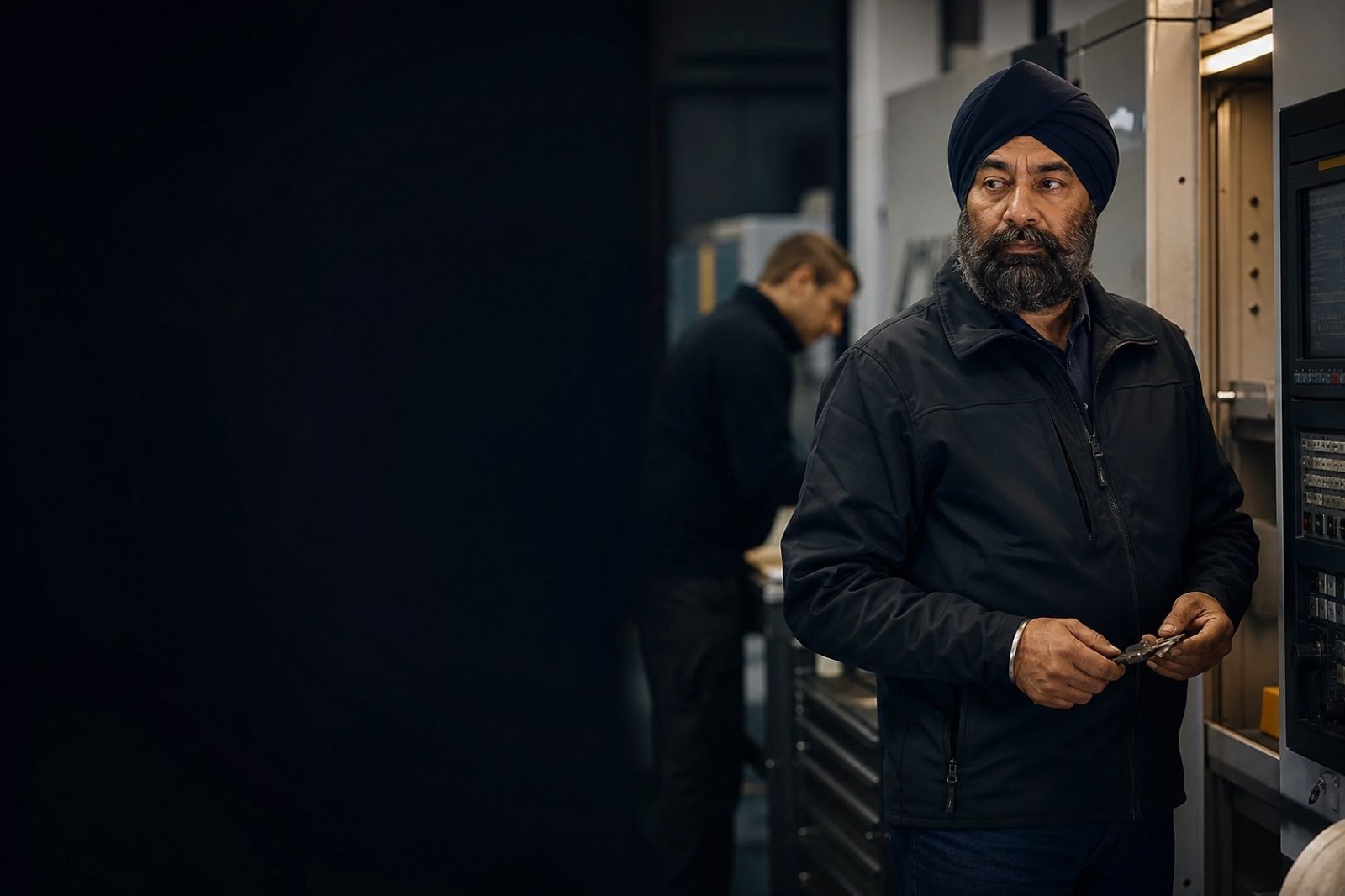
Much of the UK's Industrial Revolution began in Birmingham and the Black Country, an area that may be regarded as the world's first industrial landscape. To the north, Staffordshire is home to the industrialised Potteries conurbation around Stoke-on-Trent. That history still shapes the property market: metalworking, engineering, automotive supply and ceramics firms occupy everything from Victorian works to modern units on edge-of-town estates.
Geography does the rest. The M5, M6, M6 Toll, M42, M54 and M40 all converge on the central conurbation, which puts most of the country within a day's drive and makes the region a natural base for distribution, wholesale and trade businesses. For an owner-occupier, that means demand for well-located units is broad, and the buildings on offer range widely in age and condition.
Which buildings do companies buy across the English West Midlands?
The premises mix here leans more industrial than most regions, but it is not only factories.
- Industrial and manufacturing units: fabrication, machining, plating and automotive component workshops in the Black Country, Coventry and Telford.
- Trade counters and warehouses: builders' merchants, motor factors and wholesalers near motorway junctions on the M5, M6 and M42.
- Offices: professional and financial firms in central Birmingham and Solihull, and smaller office buildings in county towns such as Worcester and Shrewsbury.
- Retail and hospitality: high street shops, restaurants and pubs, including tourist trade in Stratford-upon-Avon and around Ironbridge Gorge.
- Healthcare: dental, pharmacy, veterinary and care premises across the conurbation and the shire counties.
Older industrial buildings are financeable, but lenders look harder at condition, environmental history and whether the building would relet if the business left. We address those points before the valuation, not after. A standard business mortgage for an owner-occupier is indicatively 6.0 to 7.5% a year, typically at 70 to 75% loan to value, subject to status, accounts and valuation.
Stamp duty and lender security on a West Midlands purchase
The region is wholly in England, so Stamp Duty Land Tax (SDLT) applies, paid to HMRC. For non-residential and mixed-use property the bands are 0% up to £150,000, 2% from £150,001 to £250,000 and 5% above £250,000 (HMRC, gov.uk; rates as at October 2026; check the current rates before you buy). Our commercial stamp duty guide shows how the slices add up and how VAT on the price changes the bill.
Conveyancing follows English law. The lender is secured by a mortgage by legal charge, registered at HM Land Registry with the transfer. On a former industrial site, expect the lender's solicitor to ask for environmental searches, and allow time for them in the timetable.
How we arrange premises finance for West Midlands (UK) companies
Many owners in the region already hold their premises and want to release equity for machinery or expansion, or to move off a loan that no longer suits. Our page on remortgaging business premises covers that route; indicative commercial remortgage pricing is 6.0 to 8.0% a year, subject to status, accounts and valuation. For a purchase, we review your accounts, the property and the deposit, approach the lenders active in owner-occupier lending whose criteria fit, and manage the process to completion.
Commercial lending to a limited company is unregulated and falls outside the FCA's regulated mortgage perimeter. Where a deal would be regulated, for example lending to a sole trader or individual, or a property where the borrower or a close family member will live in part of it, we refer it to an appropriately authorised firm. If you are also looking further east, see our page on the East Midlands, or business mortgages across England.
Cities and towns across the West Midlands conurbation and shires
Birmingham
The region's largest city, at the heart of a West Midlands conurbation of 2,594,803 people in 2021. Central Birmingham holds the professional, legal and financial offices, while the surrounding districts carry a dense mix of manufacturing workshops, trade counters, wholesale units and high street retail, much of it in older buildings that lenders assess on condition.
Coventry
The Coventry and Bedworth urban area had 389,603 people in 2021. Coventry's automotive heritage continues through engineering, design and component suppliers that occupy industrial units around the city, alongside distribution sites with access to the M6 and M69. Its universities also support technology and research businesses in smaller office and laboratory premises.
Stoke-on-Trent
The centre of the Potteries, with a built-up area of 382,687 people in 2021. Ceramics manufacturers and their suppliers still occupy works and factory buildings across the six towns, and the city's position on the M6 and A50 has brought warehousing and distribution. Older pottery buildings often need a careful valuation and survey.
Wolverhampton
Part of the West Midlands conurbation, on the western edge of the Black Country. Metal fabrication, engineering and aerospace component firms are common here, with industrial estates close to the M6 and M54. The city centre adds retail, hospitality and professional offices Wolverhampton is also well placed for firms serving both the conurbation and Shropshire.
Solihull
Part of the West Midlands conurbation, south east of Birmingham and close to the M42, Birmingham Airport and the National Exhibition Centre. Its business parks hold corporate and professional offices, and the borough's automotive manufacturing presence supports a supply chain of engineering and logistics firms that buy their own units.
Telford
A new town of 161,170 people in 2021, on the M54 near Ironbridge Gorge. Telford's planned industrial estates house manufacturers, engineering firms and distribution businesses in relatively modern units, which lenders tend to find straightforward to value. It is also the commercial centre for much of Shropshire.
Worcester
The county town of Worcestershire on the River Severn, with 107,082 people in 2021. Worcester combines a historic retail and hospitality centre with business parks near the M5 that house engineering, food and professional firms. Many purchases here are smaller freehold offices and workshops bought by established local companies.
Hereford
One of the region's seven cities and the commercial centre of rural Herefordshire. The premises mix reflects a farming county: agricultural suppliers and trade counters, food and drink producers, motor trade premises and professional practices, with independent retail in the city centre. Rural locations can narrow lender choice, so the case needs to be presented well.

Area facts: Wikipedia (West Midlands (region), Stamp duty in the United Kingdom#Stamp duty land tax, HM Land Registry). Tax figures: HMRC, Revenue Scotland and the Welsh Revenue Authority, as at October 2026.






