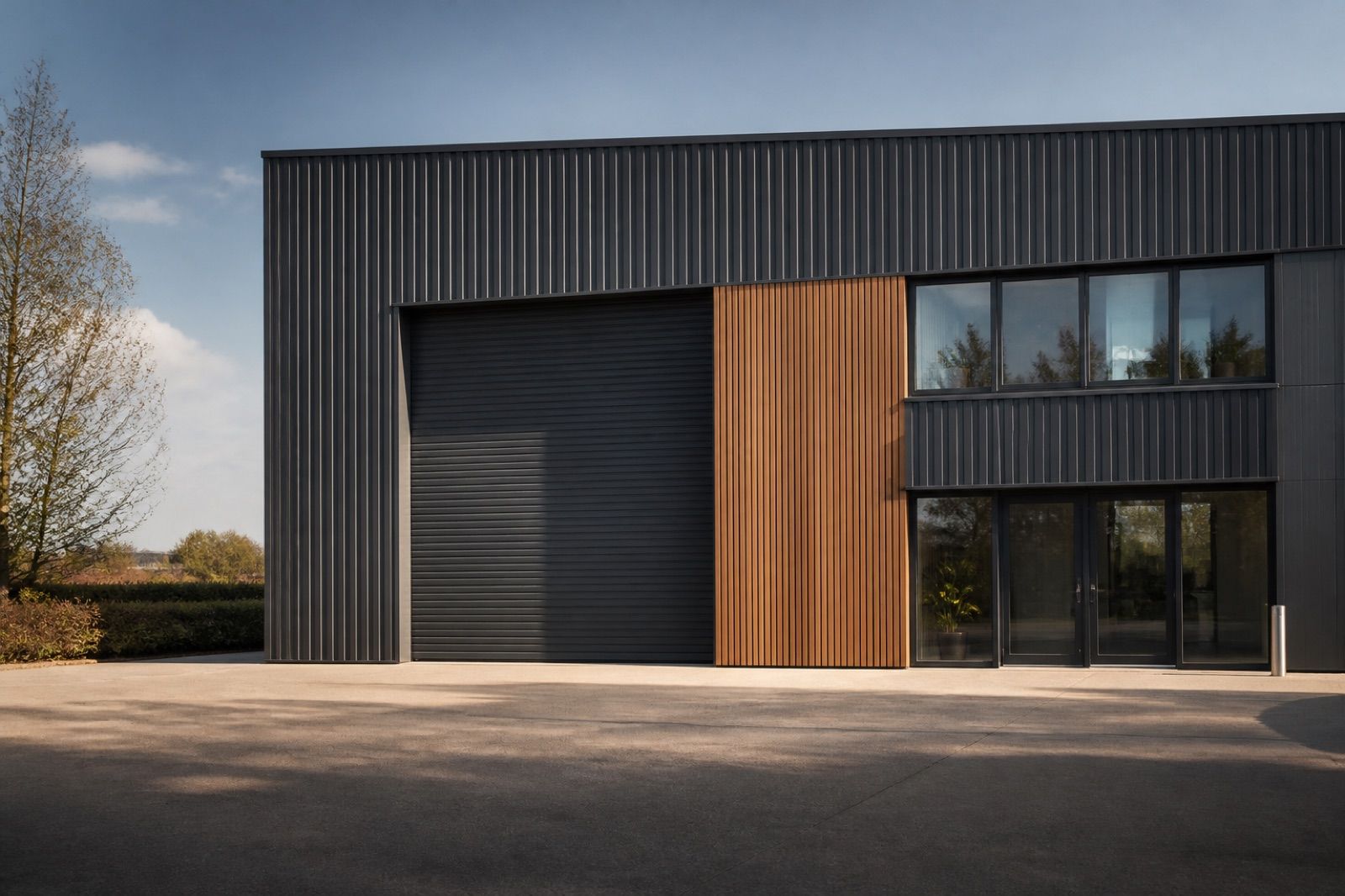

A business mortgage is a loan secured on the building a trading company occupies, used to buy or refinance that building and repaid from the company's trading profit. The borrower and the occupier are the same business. That is the whole point of the product, and it is also why it is assessed so differently from a home loan or a buy-to-let.
A lender considering a business mortgage asks one question above all others: can this company pay for this building out of what it earns, with room to spare? Your salary, the rent the building might fetch from someone else and the price you agreed all matter less than your accounts. Get the accounts story right and most of the rest follows.
We are Business Mortgages Broker, a trading name of Lenzie Consulting Ltd. We arrange business mortgages for UK trading companies. We are a broker, not a lender: we prepare your case, take it to the lenders whose criteria fit and manage it through to completion.
- Lenders lend against your trading profit first and the building second. The rent you stop paying when you own the building is added back to profit.
- Most cases are tested on debt service cover: adjusted profit divided by all annual loan payments. In our illustrative example a company with £106,000 of adjusted profit supports a £450,000 loan at about 2 times cover.
- Plan for a deposit of 25 to 30% of the price plus property tax and fees. On a £600,000 purchase in England, SDLT alone is £19,500.
- Indicative pricing is 6.0 to 7.5% a year for an owner-occupier, subject to status, accounts and valuation. Fees and the shape of the loan often matter more than a quarter of a percent on the rate.
- Lending to a limited company for its own trading premises is unregulated. Where part of the building is a home for you or your family, the loan may be regulated and we refer it to an authorised firm.
Business mortgage, commercial mortgage, investment mortgage: which one are you asking for?
People use these names loosely, but lenders do not. Each label sends your case to a different credit team with a different test. Being clear about which one you need is the first thing we sort out on any enquiry.
| Product | Who occupies the building | What the lender tests | Where we fit |
|---|---|---|---|
| Business mortgage (owner-occupier commercial mortgage) | Your own trading company | Trading profit and debt service cover, then the building | Our core work |
| Commercial investment mortgage | An unrelated tenant | The rent, the tenant's strength and the lease length | Not our focus |
| Semi-commercial mortgage | Your business below, flats above | Trade plus the residential rent, and whether anyone you know lives there | See semi-commercial premises |
| Bridging loan | Usually you, short term | The exit: how the loan will be repaid within months | See premises bridging |
| Buy-to-let mortgage | A residential tenant | Rental cover on a house or flat | Outside what we do |
Commercial mortgage is the umbrella term for all lending on non-residential property, so a business mortgage is one kind of commercial mortgage. If your company will trade from the building, you are in owner-occupier territory, and that is usually the better place to be: lenders like a borrower whose business depends on keeping the building.
How lenders work out what your company can borrow
Residential lenders use income multiples. Business mortgage lenders build up a picture of sustainable profit and compare it with the cost of all the company's debt. The method varies from lender to lender, but the shape is the same.
Step 1: start from EBITDA
EBITDA is earnings before interest, tax, depreciation and amortisation, taken from your filed accounts and, if they are more than a few months old, your current management accounts. Lenders usually look at two or three years to see whether profit is steady, growing or falling.
Step 2: add back what will not continue
The biggest add-back is usually the rent you pay today, because it stops when you own the building. Lenders may also add back genuinely one-off costs and director pension contributions above a normal level. Every add-back needs evidence. Vague ones get struck out, and that can cost you a meaningful slice of borrowing capacity.
Step 3: compare profit with all your debt payments
Debt service cover divides adjusted profit by the annual payments on every loan the company will have: the new mortgage plus existing loans, hire purchase and leases. Each lender sets its own minimum. Many look for somewhere around 1.25 to 1.5 times, more for trading businesses whose profit moves with the economy, but a comfortable margin above the minimum is what earns better terms. Our guide to how lenders read your accounts goes deeper.
Illustrative example. A precision engineering company has EBITDA of £70,000 and pays £36,000 a year in rent on its unit. It wants to buy a building for £600,000 with a 75% loan of £450,000 over 20 years.
| Line | Figure |
|---|---|
| EBITDA from the latest accounts | £70,000 |
| Add back rent that stops on purchase | £36,000 |
| Adjusted profit | £106,000 |
| Mortgage payments: £450,000 at 7.0% over 20 years, capital and interest | £41,866 a year (£3,489 a month) |
| Existing van and equipment finance | £12,000 a year |
| Total debt service | £53,866 a year |
| Debt service cover | 1.97 times |
At nearly 2 times cover this case has room to spare, so the conversation with lenders is about price and terms, not whether they will lend. Halve the rent add-back and cover falls to about 1.6 times; lose it entirely and the case becomes marginal. That is why evidencing the rent and the other add-backs properly matters so much. Try your own figures in the business mortgage calculator.
What lenders check before they say yes
Beyond the numbers, an owner-occupier lender looks at the company, the people running it and the building. These are the points that decide most cases.
- Trading history. Two or more years of filed accounts is the usual starting point. A younger company is not ruled out where the directors have long experience in the same trade and can put in a larger deposit.
- The direction of profit. A fall in one year is not fatal if there is a clear reason and current figures show recovery. An unexplained fall is the most common reason a case stalls.
- The deposit and where it comes from. Lenders want to see it in the business or the directors' hands, and they will ask whether taking it out of the company leaves enough working capital.
- Credit conduct. Late tax payments, county court judgments or an overdrawn director's loan account need explaining up front, not discovering later.
- Personal guarantees. Many lenders ask directors of smaller companies to guarantee part or all of the loan. Read our guide to personal guarantees before you sign one.
- The building. A freehold or long leasehold, in sound condition, with planning consent for your use and a market of other buyers if the lender ever had to sell it.
None of this is a checklist where every box must be ticked. Lenders weigh the whole picture, which is why the way a case is written up makes such a difference.
Rates, deposit and the cash you need to complete
Indicative pricing for an owner-occupier business mortgage is 6.0 to 7.5% a year. Trading businesses such as pubs, hotels and care homes, where the property and the trade are valued together, sit at 7.0 to 9.0%. All rates are indicative, subject to status, accounts and valuation. Rates can be fixed, usually for 3 to 5 years, or variable over a lender's base rate or the Bank of England base rate. Our rates and costs page explains how lenders price a case.
Lenders typically advance 70 to 75% of the value, and up to 80% for a strong company with a mainstream building. The rest of the price, plus the costs of buying, has to come from cash.
Illustrative example. The same £600,000 purchase in England with a £450,000 loan:
| Cash needed before completion | Figure |
|---|---|
| Deposit (25% of the price) | £150,000 |
| Stamp Duty Land Tax: 0% on the first £150,000, 2% on the next £100,000, 5% on the remaining £350,000 | £19,500 |
| Arrangement fee at 1.5% of the loan (often added to the loan instead) | £6,750 |
| Valuation, the lender's legal fees, your own solicitor and any survey | Quoted case by case |
SDLT rates are from HMRC (gov.uk), as at October 2026; check the current rates before you buy. Scotland charges Land and Buildings Transaction Tax and Wales charges Land Transaction Tax instead, on different bands, set out in our stamp duty guide. VAT may also be charged on the price if the seller has opted to tax the building, which affects your cash flow even if you can reclaim it.
Which premises lenders like, and which make them nervous
The building is the lender's fallback if the business fails, so they ask a simple question: if we had to sell this, who would buy it, and how quickly?
Mainstream: industrial and warehouse units on established estates, offices, high-street shops and modern trade counters. Plenty of other businesses could use them, so lenders are comfortable and terms are at their best.
Trading assets: pubs, hotels, care homes, nurseries and petrol stations, where the building is worth what the trade inside it earns. These are valued as a going concern, often by a specialist valuer, and priced in the higher 7.0 to 9.0% band.
Harder cases: buildings with one narrow use, such as a church conversion or a purpose-built laboratory; premises with contamination history from past industrial use; short leaseholds; and buildings without the right planning use. These are not impossible, but they narrow the field of lenders and usually reduce the loan to value.
Where part of the building is residential, such as a shop with a flat above, see our semi-commercial premises page. If a family member will live in the flat, the loan may be regulated.
High-street banks or specialist lenders?
The owner-occupier market splits broadly in two. The high-street banks, such as NatWest, Barclays, HSBC, Lloyds and Santander, lend to established, profitable companies, often at the keenest rates, and they lean heavily on the banking relationship: they like to see your current account, your conduct and sometimes your other borrowing moved to them. Challenger and specialist business lenders take a wider range of cases, including shorter trading records, specialist buildings and a weaker year, generally at higher rates. Naming a lender describes the market; it does not mean we have a relationship with it.
The cheapest headline rate is not always the cheapest loan. A lender that insists you move all your banking, takes a guarantee on your home and charges a heavy early repayment penalty can cost more over five years than one at a slightly higher rate with lighter conditions. We compare the whole package.
How we arrange your business mortgage
- A first look at the numbers. Send us the last two or three years of accounts, current management accounts and the property details. We work out adjusted profit and cover and tell you plainly what the market is likely to do, including when the answer is no.
- The case write-up. We present the business, the add-backs, the purchase and the people in the way credit teams read them, and deal with the awkward points before a lender finds them.
- Lender terms. We approach the lenders whose criteria fit and compare indicative terms on rate, fees, guarantees, covenants and early repayment.
- Valuation and underwriting. The chosen lender instructs a RICS valuation and underwrites in full. We manage the questions and keep the timetable moving.
- Legal work and completion. Your solicitor and the lender's solicitor handle the title, searches and security. In England and Wales the lender takes a legal charge registered at HM Land Registry; in Scotland a standard security; in Northern Ireland a mortgage or charge registered with Land and Property Services.
See how it works for the documents we ask for. Commercial lending to a limited company is unregulated and falls outside the FCA's regulated mortgage perimeter. Where a deal would be regulated, for example lending to a sole trader or individual, or a property where the borrower or a close family member will live in part of it, we refer it to an appropriately authorised firm. We are not tax, legal or pension advisers. Our founder, Matt Lenzie, has 25 years in financial services, raising debt and equity, with around £400m arranged.
When buying is the wrong answer
Owning your premises ends rent reviews and builds an asset, but it ties up cash and makes it harder to move. Buying usually makes less sense if the business is likely to outgrow the building within a few years, if the deposit would leave the company short of working capital, or if the business itself is still finding its feet. Our rent versus buy guide works through the numbers.
There are also other routes to ownership. A company pension, a SIPP or SSAS, can buy the premises and let them to the business, which has tax advantages and its own rules; a regulated pension adviser must advise on that, and our pension purchase page explains how the finance fits. If you already own the building, a commercial remortgage can release equity for growth.